


Key Takeaways
- Myopia happens when the eye grows too long, causing light to land in front of the retina instead of on it.
- Myopia cannot be reversed, but it can be corrected and managed.
- Glasses, contacts, LASIK, and orthokeratology lenses correct vision without changing eye length.
- Slowing myopia progression in children can reduce the risk of serious eye conditions later in life.
- Regular eye exams are one of the most effective tools for managing myopia over time.
What Myopia Actually Does to Your Eyes
You squint at the board, the street sign, or the TV across the room, but close-up objects like your phone are clear. That’s myopia in a nutshell.
Ultimately, myopia has to do with the shape of your eye. When the eye grows too long from front to back, this causes light to focus in front of the retina, a tissue located at the back of your eye. The result is blurry distance vision.
Because myopia is caused by the shape of the eye, it can’t be reversed. However, it can be managed and slowed. Vision correction is possible for both adults and children, while myopia control treatments have shown to slow the progression of the condition in children.
At Total Vision Mira Mesa, we’re here to help you and your family manage this condition.
Why Distance Vision Gets Blurry
Think of the retina as a projector screen. In order to get a clear image, light needs to land directly on the screen. In a myopic eye, however, light is focused in front of the “screen”, so the image is imperfect by the time it arrives. This causes blurry distance vision, while close-up vision remains clear.
Why Myopia Gets Worse Over Time
Myopia tends to progress most during childhood and the teenage years, when the body (including the eyes) is still growing. As the eye grows longer, a person’s prescription gets stronger. For most people, this process slows down and stabilizes somewhere in the late teens or early 20s.
Myopia control helps slow the rate at which myopia gets worse, allowing children to reach adulthood with better vision than they would otherwise have.
The Short Answer: Reversal vs. Correction
Myopia cannot be reversed. Eye length is a physical property, and no exercise, supplement, diet, or screen-time rule can change the actual shape of a person’s eyes.
However, vision correction is still an option. Correcting myopia usually involves wearing glasses or contact lenses to change how light enters the eye. In adults, laser eye surgery like LASIK reshapes the cornea in order to achieve a similar result. However, regardless of the option you choose, the shape of your eye doesn’t actually change, so your underlying myopia still remains.
Why Slowing Myopia Matters for Long-Term Eye Health
Myopia isn’t just about needing a prescription. Higher levels of myopia are associated with a greater chance of developing serious eye conditions like retinal detachment and glaucoma later in life. These aren’t guaranteed outcomes, but they’re real considerations that make it worthwhile to keep myopia in check.
Why Myopia Control Makes a Difference
Myopia control has been shown to slow progression of the condition in children. This can mean a lower final prescription once they reach adulthood and a reduced risk of future complications.
Ways to Help Slow Myopia Progression
Habits That Support Healthier Eye Development
Spending at least 2 hours outside every day has been shown to reduce children’s risk of myopia.
Limiting screen time and taking regular breaks from close work gives the visual system a chance to reset throughout the day. Excessive screen time is a big contributor to myopia development in children.
Management Options for Myopia
While myopia can’t be reversed, myopia control has been shown to help manage the condition in children. Common options include:
- Atropine eye drops, which are applied to each eye before bed
- Ortho-k lenses, which are worn overnight and keep vision clear without the need for daytime glasses or contacts
- Multifocal lenses, which are designed to focus light in a way that slows the eye’s front-to-back growth.
How Regular Eye Exams Fit into Myopia Care
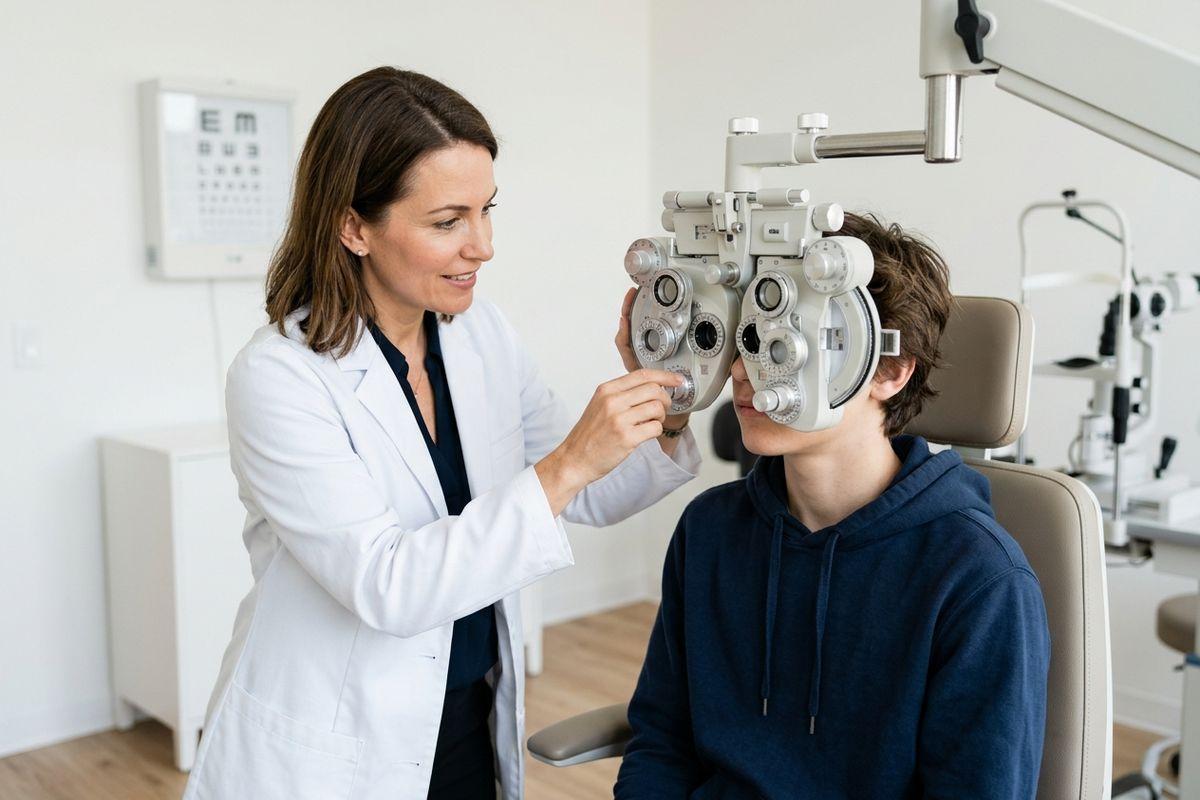
Managing myopia depends on knowing what’s happening inside the eye. During a comprehensive exam, an eye doctor can track changes in a child’s axial length, which tells them whether the condition is progressing. Catching changes early means that your child’s prescriptions can be adjusted.
At What Age Should Eye Exams Start?
Children should have their first eye exam before they start school. Annual visits from that point forward give their doctor a clear picture of how the eyes are developing. As your eye doctor in San Diego, we can build an age-appropriate plan that meets your child’s needs.
Adults with myopia also benefit from annual exams. Even when a prescription feels stable, the health of the retina and surrounding structures deserves regular attention.
Take the Next Step with Total Vision Mira Mesa
Myopia can’t be reversed, but it can be managed. Whether you’re looking after your own eyes or keeping track of your child’s vision, management starts with an eye exam.
Total Vision Mira Mesa offers thorough eye exams for every age, from young children to adults and seniors. Our team takes the time to understand how your vision is changing and what options make the most sense for you. Book your appointment today and take a proactive step toward clearer, healthier vision.